What this snow removal contract covers
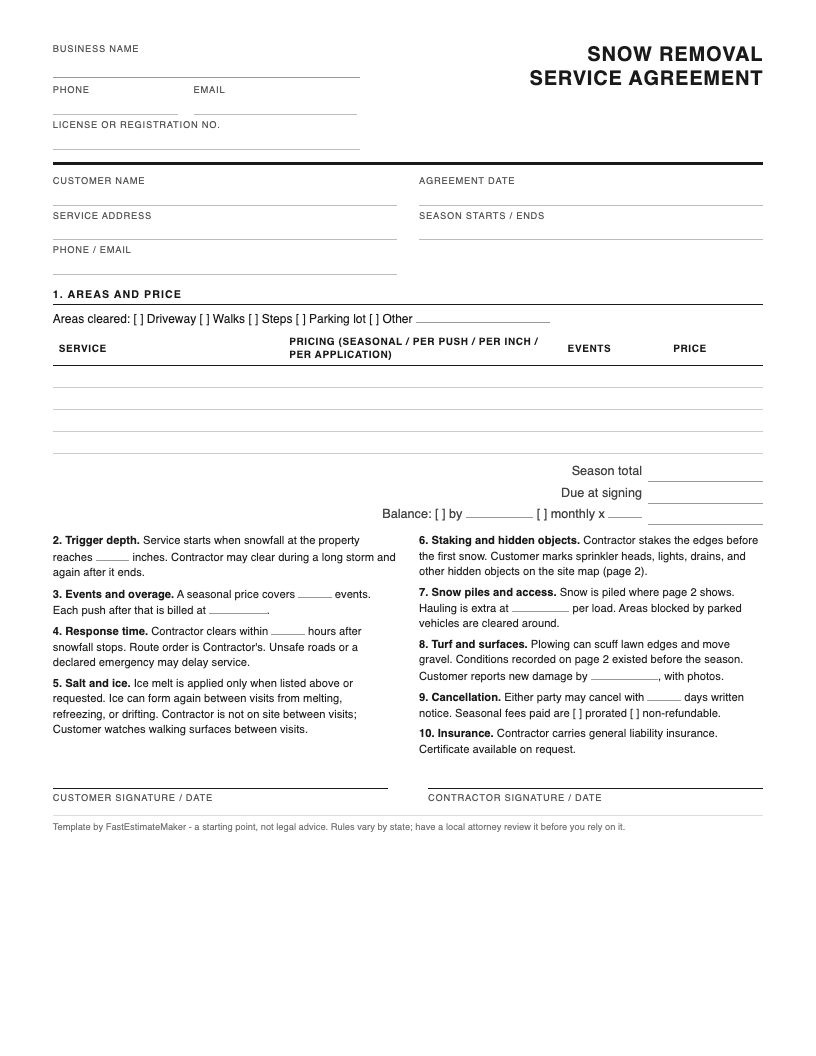
Most snow removal disputes happen in February: it snowed more than anyone planned, a push came later than the customer wanted, or spring shows a torn-up lawn edge. The agreement settles each of those in writing before the first storm:
- Season and areas - start and end dates, and checkboxes for the driveway, walks, steps, parking lot, and anything else you clear.
- Pricing model - a seasonal price with the events it covers, per push, or per inch, plus salt and ice melt per application.
- Trigger depth - the snowfall that starts a visit, written as a number.
- Overage rate - what each push past the covered events costs, so a heavy winter is paid for instead of argued about.
- Response time - how soon after the snow stops you clear, and that the route order is yours.
- Ice between visits - ice can form again from melting and refreezing after you leave, and you are not on site between visits.
- Staking, snow piles, and surface damage - where the stakes go, where the snow is piled, and how turf scuffs and moved gravel are handled in spring.
- Payment, cancellation, and insurance - the deposit, the payment schedule, the cancellation notice, and a line stating that you carry general liability insurance.
Trigger depth, events, and overage
These three lines decide whether a seasonal contract makes money. The trigger depth, usually 2 inches, says when a visit happens. The events covered, usually 8 to 12 for most snow markets, say what the seasonal price pays for. The overage rate says what every push past that costs. Leave any of them off and a heavy winter becomes free work. Our snow removal pricing guide has 2026 seasonal, per-push, and per-inch rates to fill them in.
The site map on page two
Walk the property with the customer before the ground freezes. Sketch the driveway and walks, and mark where each stake goes, where the snow is piled, and every hidden object a plow can hit: sprinkler heads, landscape lights, low walls, drain grates, and curbs. Then write down what is already damaged - cracked pavers, a leaning mailbox, broken edging - and photograph it. Both of you initial the sheet. In spring, the bottom of the page records the final walk and the day the stakes came out.
Ice and slip-and-fall
Ice is where snow removal carries real risk. Snow melts in the afternoon sun and refreezes overnight, long after the push. The contract says that ice can form again between visits, that salt is applied only when it is listed or requested, and that the customer watches walking surfaces between visits. That is a record of what you agreed to do, not a waiver, and it does not replace insurance. Commercial clients ask for a general liability certificate before the season starts.
When you want it signed on a phone
In FastEstimateMaker you can save this agreement as a contract template, attach it to the season's estimate, and the customer signs the price and the agreement together on their phone, with a signature certificate on the signed PDF. Bill a seasonal contract in monthly payments with recurring invoices, and use the pre-job walkaround to photograph page two's existing damage on your phone - each photo carries the time it was taken and its distance from the service address, and the customer signs off on the set.
Price it first - the snow removal estimate template is the one-page quote that comes before this agreement.
This template is a starting point, not legal advice. Contract, consumer-protection, and premises-liability rules vary by state; have a local attorney review it before you rely on it.