What makes a plumbing quote different
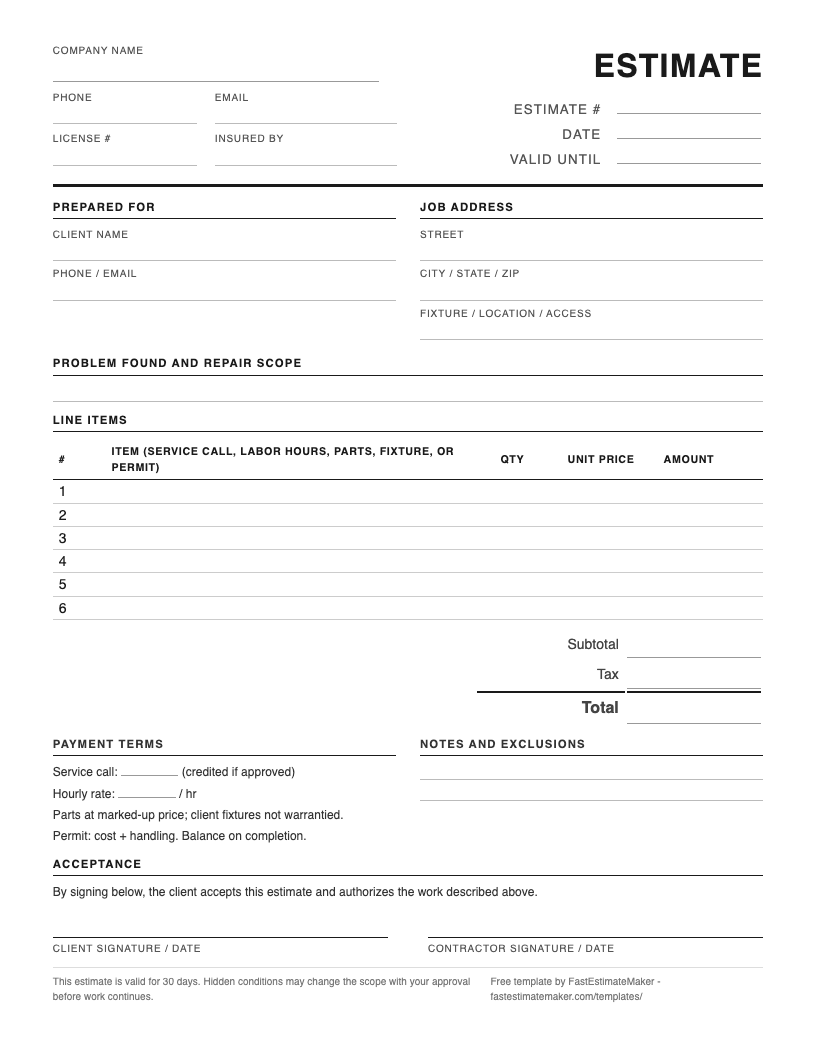
Plumbing is labor plus parts plus a service call, and clients argue about all three unless each is its own line. The estimate has to show the diagnosis, the hourly rate, the parts markup as a price rather than a percentage, and what happens when the wall is opened and the pipe behind it is worse than expected.
- Fixture, location, and access on the job block - a second-floor bathroom with a finished ceiling below is a different job from the same faucet in a garage.
- A problem-and-scope section above the line items for what you found and what you are proposing to do about it.
- An item column for the service call, labor hours, parts, fixtures, and permits, so "service call" and "2.5 hours labor" and "supply lines and valve" are separate visible prices.
- Service call fee and hourly rate in the terms, with the service call applied to the job if the client approves it - the standard that stops the "why am I paying twice" call.
- Signatures, with a hidden-conditions clause in the fine print - corroded pipe, code upgrades, and slab access change the scope with approval before work continues.
Pricing it
- Put the service call on its own line and say it is credited to the job. Our plumbing pricing guide carries 2026 benchmarks for service calls, hourly rates, and the common fixture jobs.
- Quote labor as hours at a stated rate, not a lump sum - it is what makes the number defensible when the job runs long.
- Price parts as the marked-up number, not cost plus a percentage on the page. The client sees a price; the markup is yours.
- Name the permit as cost plus handling wherever the job needs one, and say who pulls it.
When the estimate should happen under the sink
Most repair quotes can be priced on the diagnostic visit. FastEstimateMaker lets you snap the fixture and the problem, speak the scope, and text a signed-off estimate before you go to the truck for parts.