What is on the template
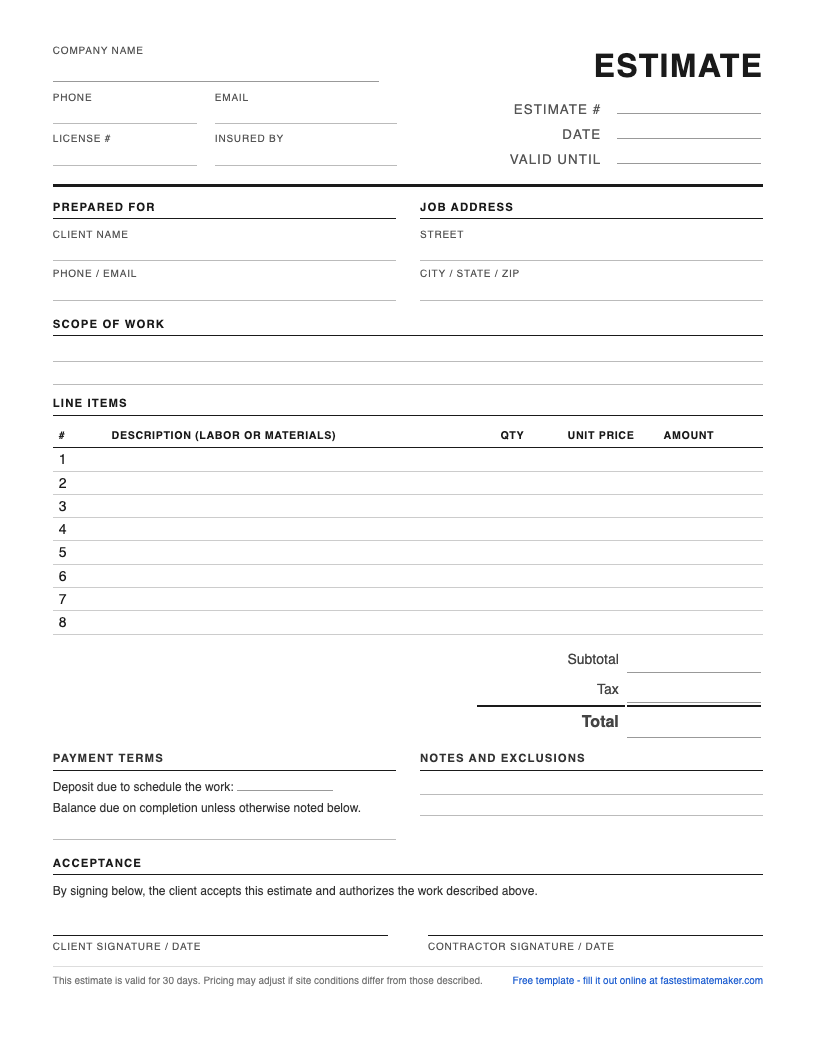
Most free estimate templates are an invoice with the word swapped. This one is built the way working contractors actually quote:
- Business header with license and insurance lines. Homeowners increasingly check for both before signing - putting them at the top of the page is the cheapest trust signal you can send.
- A scope of work section. Two lines that prevent most disputes. Write what is included; the notes box covers what is not.
- Eight line items with a labor-or-materials column. Enough for a typical residential job, with quantity, unit price, and amount so the math is visible.
- Deposit terms. A deposit line with the balance due on completion - the single most skipped section on homemade quotes, and the one that protects your schedule. Our deposit guide covers what to charge.
- An acceptance block. Signature and date for both parties turns the quote into an agreement.
How to fill it out
- Print a stack, or open the PDF in any editor that supports form-style typing.
- Fill the header once per batch - business name, phone, license - so on-site you only write the job.
- Number your estimates (a simple YEAR-### runs fine) and date every one; the template gives the quote a 30-day validity window by default.
- Write the scope BEFORE the prices. A client who understands the work argues less about the number.
- Set the deposit, get the signature, and keep the carbon - or photograph the signed page.
When paper stops being worth it
The template breaks down at about the same point for everyone: the day you need to re-quote from the truck, revise a line item without redoing the math, or chase a client who "never got it." That is the job writing an estimate software exists for - speak the scope, and FastEstimateMaker formats, brands, sends, and tracks the same document, with the deposit collected by card the moment they sign.